
Wrist Pain in Lacrosse Players: Cradling, Slash Checks, and the Overuse Nobody Talks About
 Lacrosse
Nobody warms up their wrists before lacrosse practice, but few sports ask more of them. Cradling is a constant, rapid rolling of the wrist that keeps the ball snug in the pocket, and a player might repeat it thousands of times per week. Then come the sudden loads: hard shots, faceoff clamps, one-handed checks, slash checks across the gloves, and the occasional fall onto an outstretched hand. Wrist pain in lacrosse is far more common than the attention it gets.
What's actually going on
The causes sort into two buckets. Overuse pain builds gradually, usually as tendon irritation on the thumb side or back of the wrist from cradling and shooting volume. The classic version is pain with turning the wrist under load, like the top hand rolling through a cradle or snapping a shot.
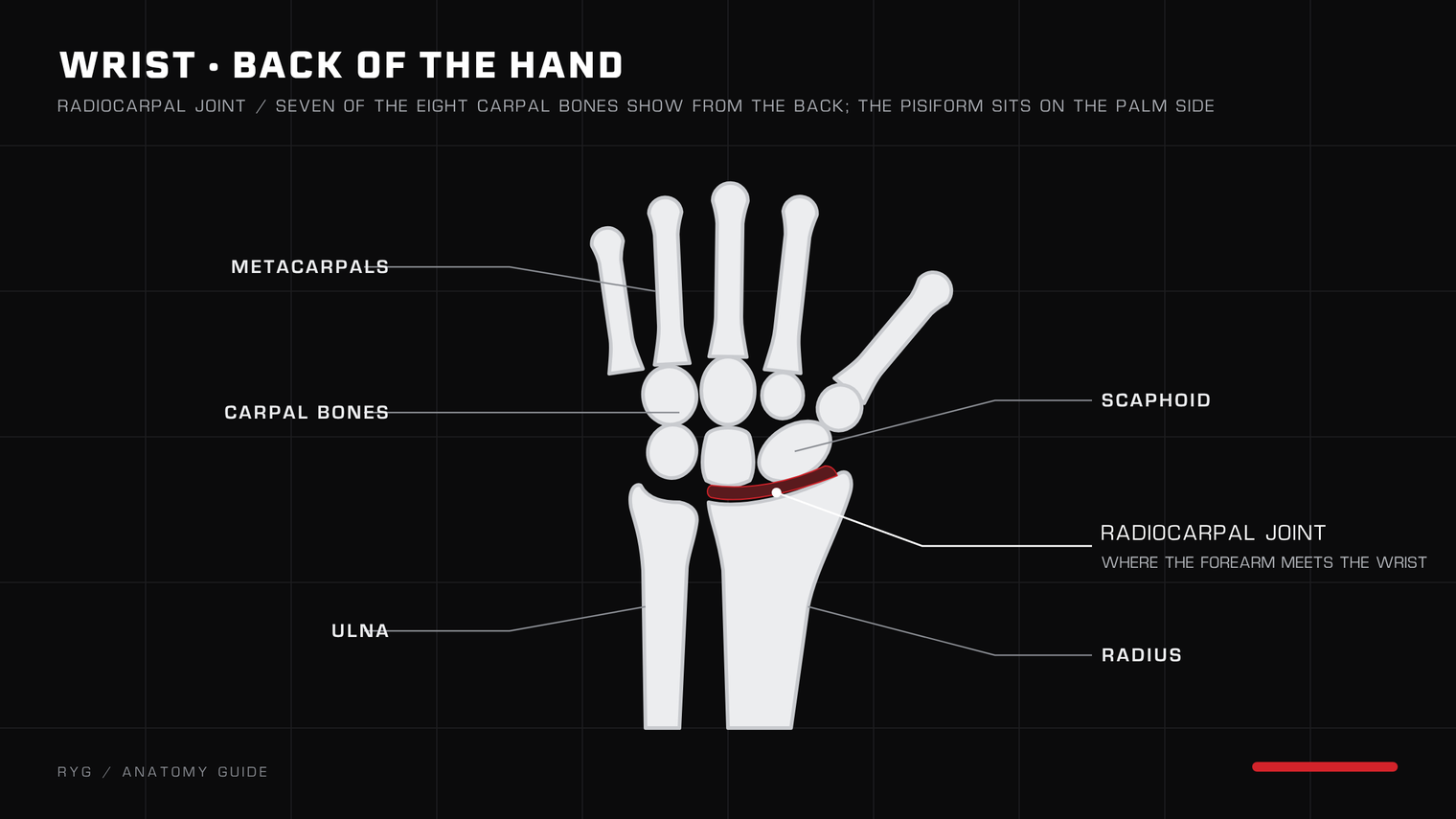
Traumatic pain starts with a single event, a slash, a fall or a jammed hand. Here you have to respect one rule. A fall onto an outstretched hand with pain in the small hollow at the base of the thumb needs an X-ray, because a bone called the scaphoid can break there, hide from early imaging, and heal poorly if it is missed.
What the research says
- Hand and wrist injuries account for up to 25% of all sports injuries. In professional athletes only about 18% need surgery, average return to play is 2.8 months, and most athletes get back to their previous performance1.
- The scaphoid is the bone to worry about after a fall: it accounts for over 85% of sport-related wrist bone fractures2.
- Scaphoid fractures treated in a cast healed in 85% of cases over about 14 weeks, while screw fixation healed 97% in about 10 weeks and got athletes back roughly 2 weeks sooner; playing immediately in a cast carried a significant risk of non-union2.
- In college football, a collision sport played in gloves, wrist and hand injuries happened 7 times more often in games than practice; 7 in 10 cost no time, but fractures caused the longest absences3.
- Technique shapes where the wrist hurts. In recreational tennis players, grip style predicted whether injuries landed on the pinky side or the thumb side, and the average time out of competition was 69 days4.
- Among European Tour golfers, 30% reported a wrist problem, and many minor ones were managed by adjusting technique and practice volume so the player kept competing while recovering5.
What we do about it
Rule out the bone first. Tenderness in the thumb-side hollow after a fall gets imaged before anything else, because the cost of missing a scaphoid fracture is measured in months2.
Take the poke out of the tendon. For overuse pain, short-term changes matter: adjusting top-hand position, trading hard shooting reps for passing reps for a couple of weeks, or a simple brace for practices. The wrist never gets a day off in this sport, so modification is how the tendon gets a window to settle, the same way golfers manage practice volume to keep playing5.
Load it. Grip work, wrist curls in every direction, and loaded forearm rotation with a hammer handle or light bar. Tendons that are trained shrug off cradle volume; tendons that are only rested do not.
Return in steps. Passing, then cradling at speed, then shooting, then checks and faceoffs. This is the progression we run in the clinic, with a test at every phase before you move on.
When to get it looked at
- A fall on an outstretched hand with tenderness at the base of the thumb. That is an X-ray, and sometimes a repeat X-ray or MRI if the first is clean2.
- Swelling, deformity or inability to grip after a slash or a jam.
- Clicking or a sense of instability with rotation, which points at ligaments or the pinky-side cartilage rather than a tendon.
- Overuse pain that has not improved after three weeks of modification and loading.
Bottom line
Most lacrosse wrist pain is an under-trained tendon meeting relentless cradle volume, and six weeks of simple loading plus smart modifications is usually the fix. The exception is the fall onto the hand, where a missed scaphoid fracture can cost a season. An in-person evaluation helps you sort overuse from something that needs imaging.
References
- Lehman JD, Krishnan KR, Stepan JG, et al. Prevalence and Treatment Outcomes of Hand and Wrist Injuries in Professional Athletes: A Systematic Review. HSS J. 2020;16(3):280-287. PubMed
- Goffin JS, Liao Q, Robertson GA. Return to sport following scaphoid fractures: A systematic review and meta-analysis. World J Orthop. 2019;10(2):101-114. PubMed
- Bartels DW, Hevesi M, Wyles C, et al. Epidemiology of Hand and Wrist Injuries in NCAA Men's Football: 2009-2010 to 2013-2014. Orthop J Sports Med. 2019;7(4):2325967119835375. PubMed
- Tagliafico AS, Ameri P, Michaud J, et al. Wrist injuries in nonprofessional tennis players: relationships with different grips. Am J Sports Med. 2009;37(4):760-767. PubMed
- Hawkes R, O'Connor P, Campbell D. The prevalence, variety and impact of wrist problems in elite professional golfers on the European Tour. Br J Sports Med. 2013;47(17):1075-1079. PubMed
Alex is very approachable and makes you feel comfortable. Wrote me a program to rehab my broken wrist that I had surgery on. You can tell he truly cares and takes his profession seriously.
This article is for education and does not replace an evaluation. If you're dealing with an active injury, see a licensed medical provider.