
Ankle and Foot Prehab for Runners: Ten Minutes a Week That Protects Every Mile
 Track & Running
Every force in running enters through one place, your foot and ankle. On every stride, that small tower of bones, tendons and muscles catches your entire body weight multiplied several times over, stores the energy, and gives it back. Yet most runners train everything except this system, then act surprised when the injury list, plantar fasciitis, Achilles pain, shin splints, ankle sprains, reads like a map of the lower leg.
The logic of prehab in one sentence: tissues fail when demand exceeds capacity, so you either manage demand or raise capacity, and raising capacity is the only option that also makes you faster.
What's actually going on
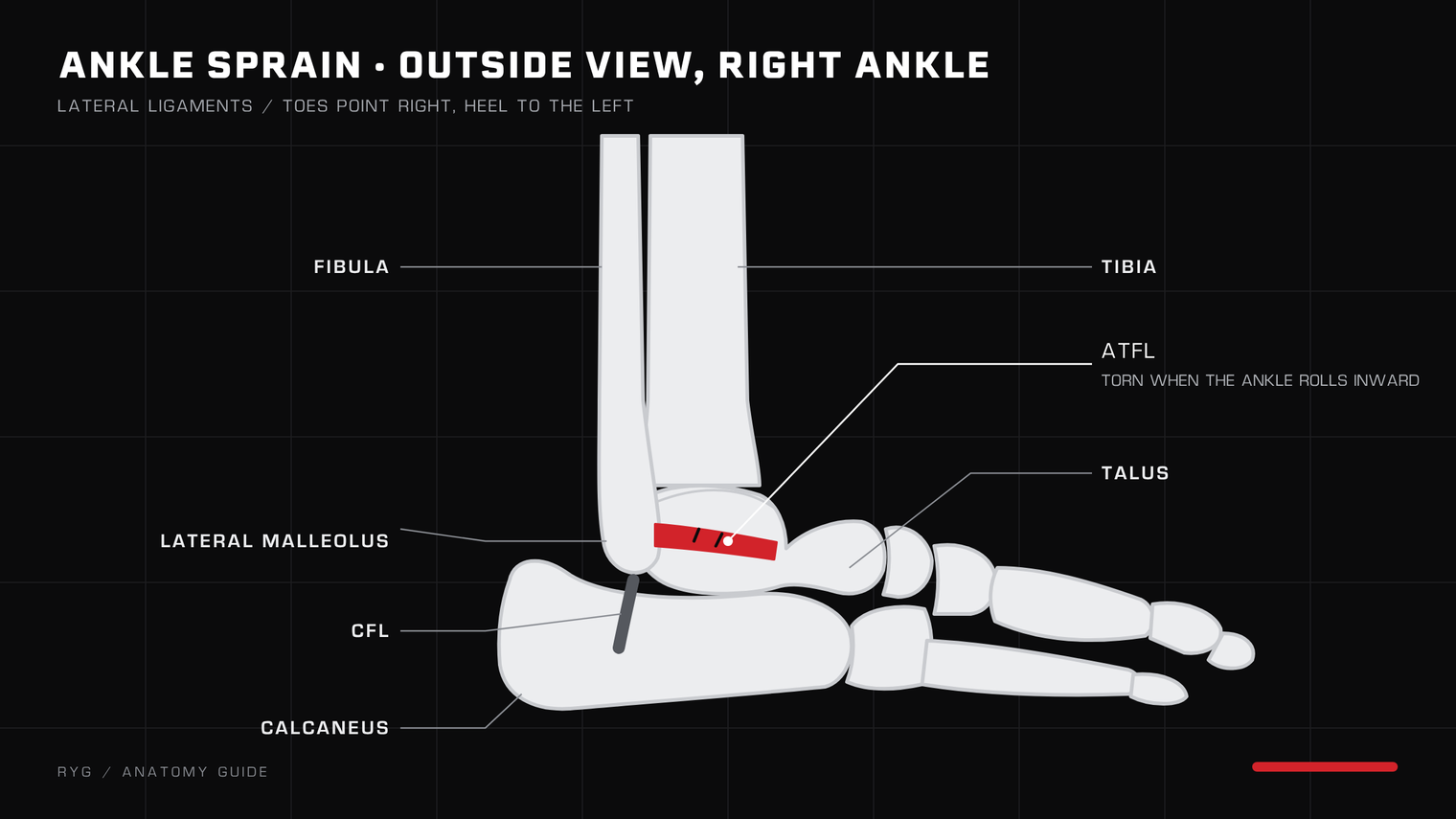
The calf produces a huge share of your propulsion, and calf strength is the first thing to go in masters runners. The small muscles inside your foot stiffen your arch spring at push-off and share load with the plantar fascia. The peroneals on the outer shin catch a rolling ankle before it becomes a sprain, but only if the position sense that triggers them is sharp. And ankle dorsiflexion, the amount your shin can travel over your foot, decides how much of each landing the calf and fascia have to absorb.
All of it responds to a few sets of focused work, and the research on injury prevention says that work pays off more than anything you can buy.
What the research says
- Across 25 randomized trials in 26,610 athletes, strength training cut sports injuries to less than one-third and nearly halved overuse injuries. Stretching alone did not reduce injuries1.
- The protective effect is dose-dependent: every 10% increase in strength training volume reduced injury risk by more than 4 percentage points, and the programs were safe with high compliance2.
- Balance training works on the ankle specifically. An 8-week home balance program cut re-sprains from 33% to 22% over a year in 522 athletes, a 35% reduction, with the biggest benefit in athletes whose original sprain had never been treated3.
- Being unable to do a single-leg drop landing or a drop jump 2 weeks after a first sprain predicts who will go on to chronic ankle instability, which makes those two drills both a test and a target4.
- A stiff ankle is the single biggest risk factor for plantar fasciitis: people with 0 degrees or less of dorsiflexion had 23 times the odds compared with those who had more than 10 degrees5.
- Having had Achilles pain in the previous 12 months raises the odds of a new episode more than 6-fold, and roughly a third of runners with a new episode still have symptoms a year later, so the calf is the tissue most worth protecting in advance6,7.
What we do about it
The routine we give nearly every runner takes about ten minutes, two or three times a week. Single-leg calf raises, slow and heavy, both straight-knee and bent-knee, progressing by adding weight rather than endless reps. Big toe and arch work: pressing the big toe down while the arch lifts, then short-foot holds during balance. Single-leg balance, eyes open then closed, then on a folded towel, then with a reach or a catch. Resisted ankle work with a band, especially turning the foot outward for the peroneals. And a dorsiflexion check against a wall, with mobility work if the ankle is short.
Then a small dose of hopping and landing, because tendons and the balance system both need fast load to stay sharp, and the drop landing is the test the research flags. For runners with a sprain history who race on trails, a lace-up brace during the rebuild is backed by trial data and complements the work rather than replacing it8. This is the progression we run in the clinic, with a test at every phase before you move on.
When to get it looked at
- You cannot do a set of single-leg calf raises on one side, or the count is clearly uneven
- Your ankle gives way or you avoid trails because you do not trust it
- Morning heel pain or Achilles stiffness that has lasted more than a few weeks
- Inner-ankle pain behind the bone, especially with a flattening arch
- Pinpoint shin or foot bone pain that is worse as a run goes on
Bottom line
The payoff of prehab shows up as the injury that never happens, and the research says strength and balance work cut injury risk by a third to a half. Ten minutes, a few times a week, is cheap insurance for every mile. If you would like it built out and progressed properly, an in-person evaluation can get you started.
References
- Lauersen JB, Bertelsen DM, Andersen LB. The effectiveness of exercise interventions to prevent sports injuries: a systematic review and meta-analysis of randomised controlled trials. Br J Sports Med. 2014;48(11):871-877. PubMed
- Lauersen JB, Andersen TE, Andersen LB. Strength training as superior, dose-dependent and safe prevention of acute and overuse sports injuries: a systematic review, qualitative analysis and meta-analysis. Br J Sports Med. 2018;52(24):1557-1563. PubMed
- Hupperets MD, Verhagen EA, van Mechelen W. Effect of unsupervised home based proprioceptive training on recurrences of ankle sprain: randomised controlled trial. BMJ. 2009;339:b2684. PubMed
- Doherty C, Bleakley C, Hertel J, et al. Recovery From a First-Time Lateral Ankle Sprain and the Predictors of Chronic Ankle Instability: A Prospective Cohort Analysis. Am J Sports Med. 2016;44(4):995-1003. PubMed
- Riddle DL, Pulisic M, Pidcoe P, et al. Risk factors for Plantar fasciitis: a matched case-control study. J Bone Joint Surg Am. 2003;85(5):872-877. PubMed
- Lagas IF, Fokkema T, Verhaar JAN, et al. Incidence of Achilles tendinopathy and associated risk factors in recreational runners: A large prospective cohort study. J Sci Med Sport. 2020;23(5):448-452. PubMed
- Lagas IF, Fokkema T, Bierma-Zeinstra SMA, et al. How many runners with new-onset Achilles tendinopathy develop persisting symptoms? A large prospective cohort study. Scand J Med Sci Sports. 2020;30(10):1939-1948. PubMed
- McGuine TA, Brooks A, Hetzel S. The effect of lace-up ankle braces on injury rates in high school basketball players. Am J Sports Med. 2011;39(9):1840-1848. PubMed
Alex is truly the best. He spends quality time with you listening and assessing the situation intently. He's very knowledgeable. He's helped me with a bum ankle and dry needling on a chronically bad back. He even came in on a Sumday on 12 hours notice to help my son with a hip flex, who was in the middle of track season. The best!
I recommend RYG to anyone struggling with a lingering injury or chronic problem that has yet to be diagnosed. A mysterious non-muscular issue in my foot had been giving me trouble for months. I came to RYG and within 48 hours I had a detailed outlined plan for rehab, a specific diagnosis, and prevention methods for future flare ups. I recovered shortly and haven’t had trouble since. I just started my track season off with a win in the 55m at the UW-Whitewater meet. All thanks to RYG!
This article is for education and does not replace an evaluation. If you're dealing with an active injury, see a licensed medical provider.